
Last updated November 22, 2026
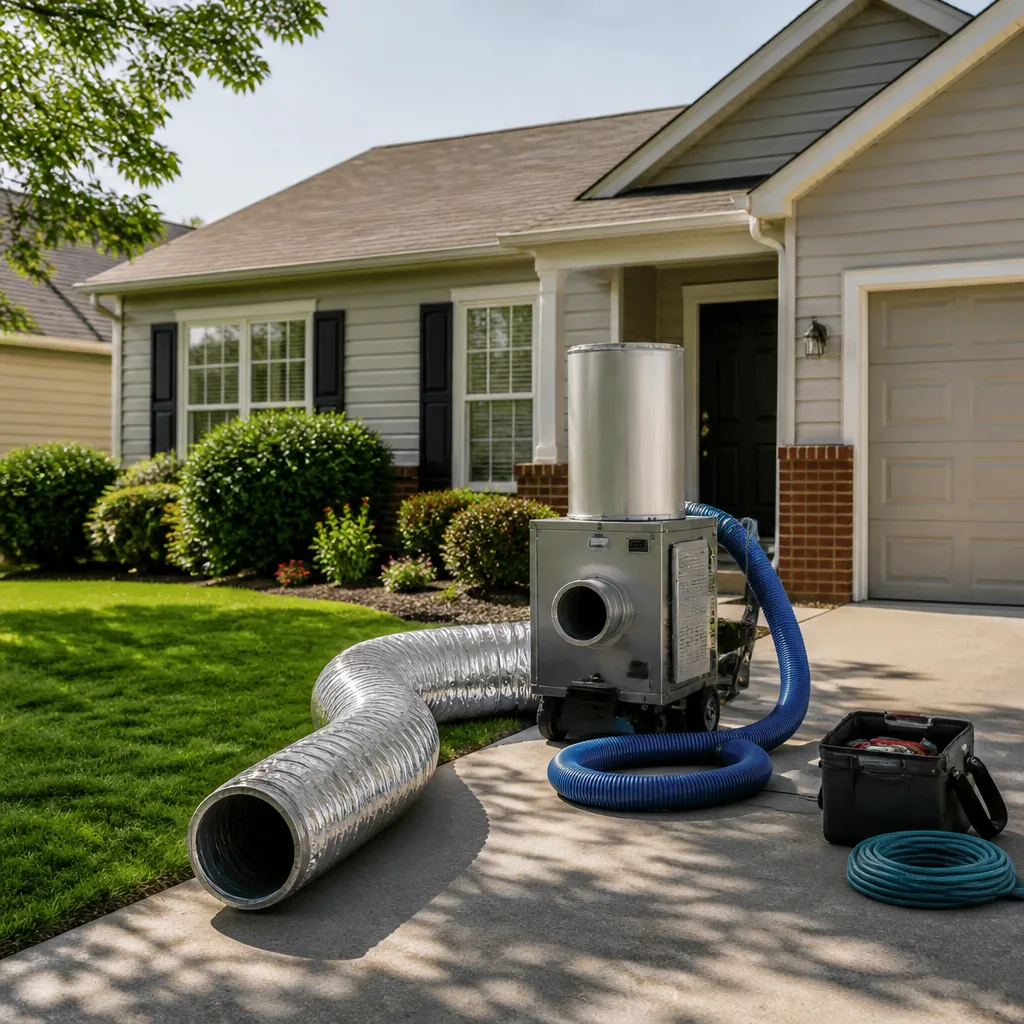 Whole-home duct cleaning
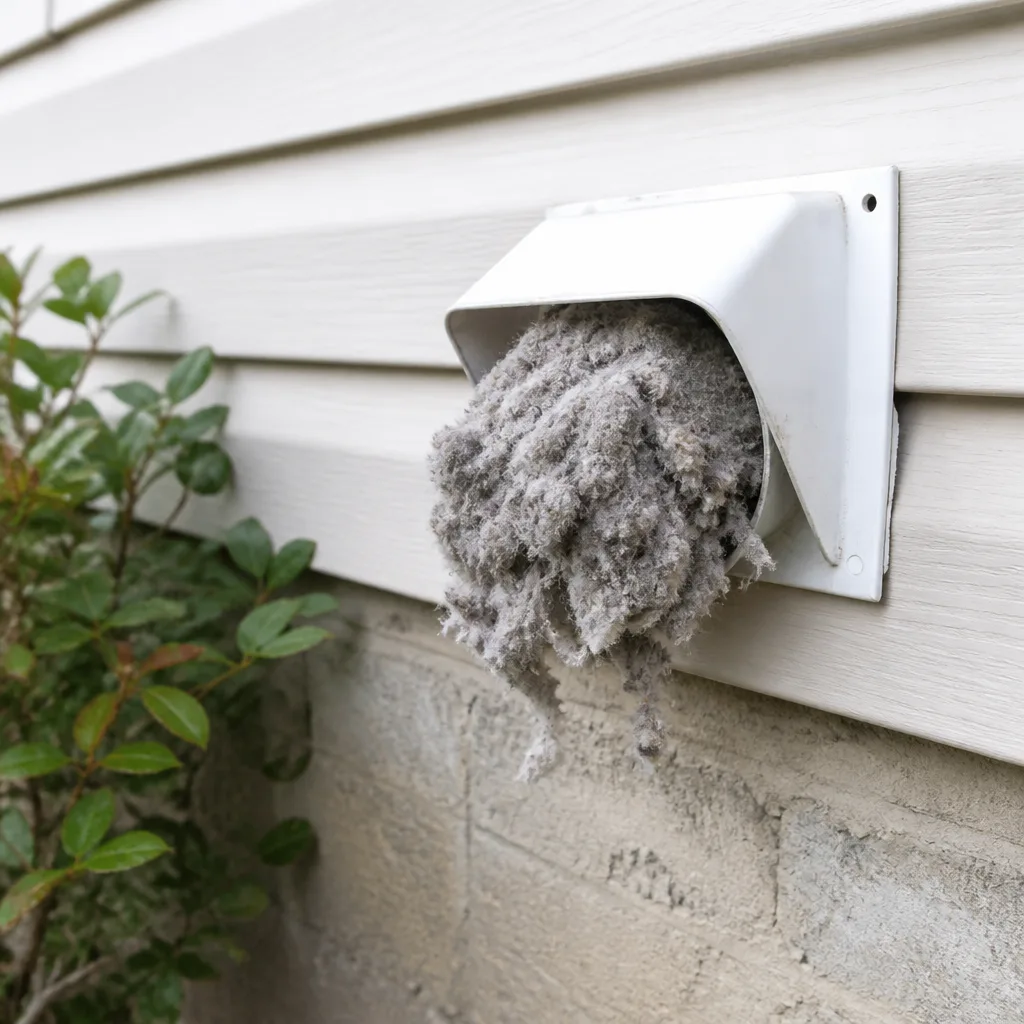 Dryer vent cleaning
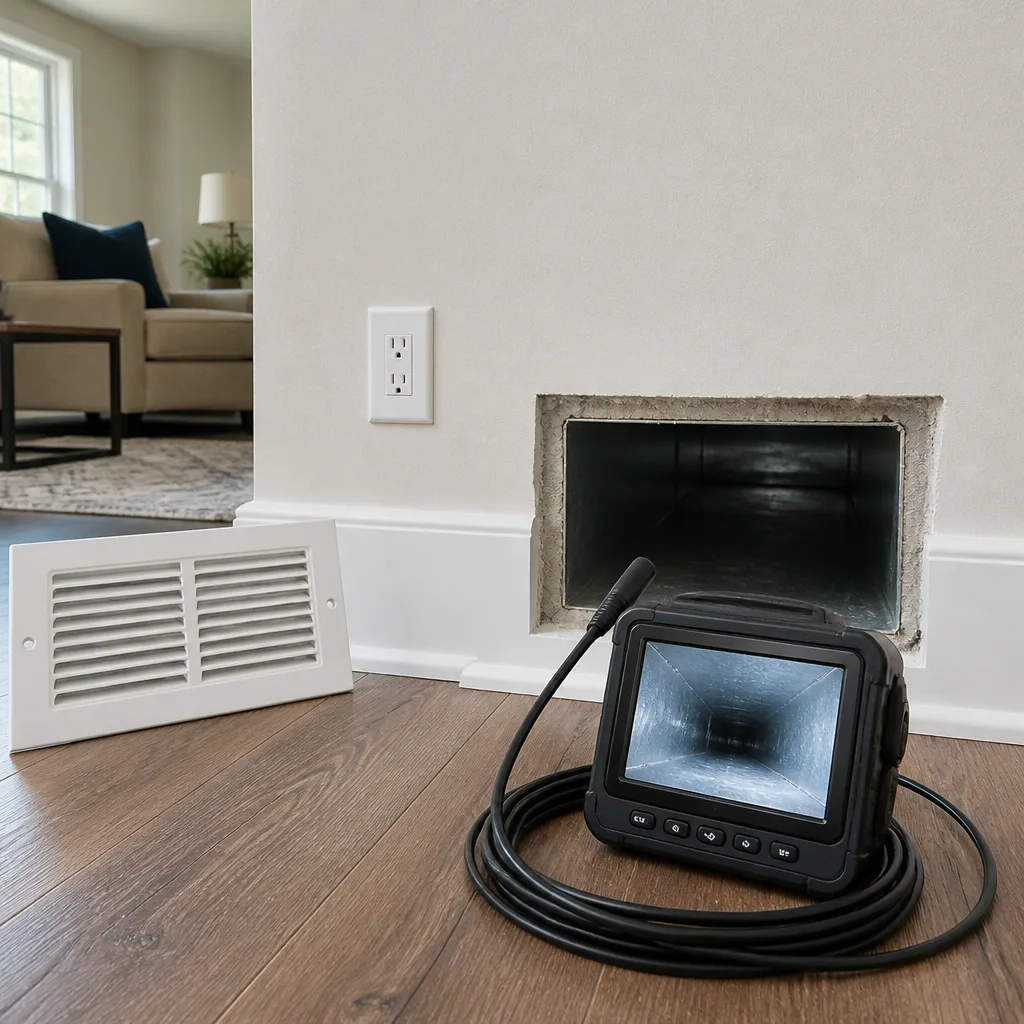 Camera inspection
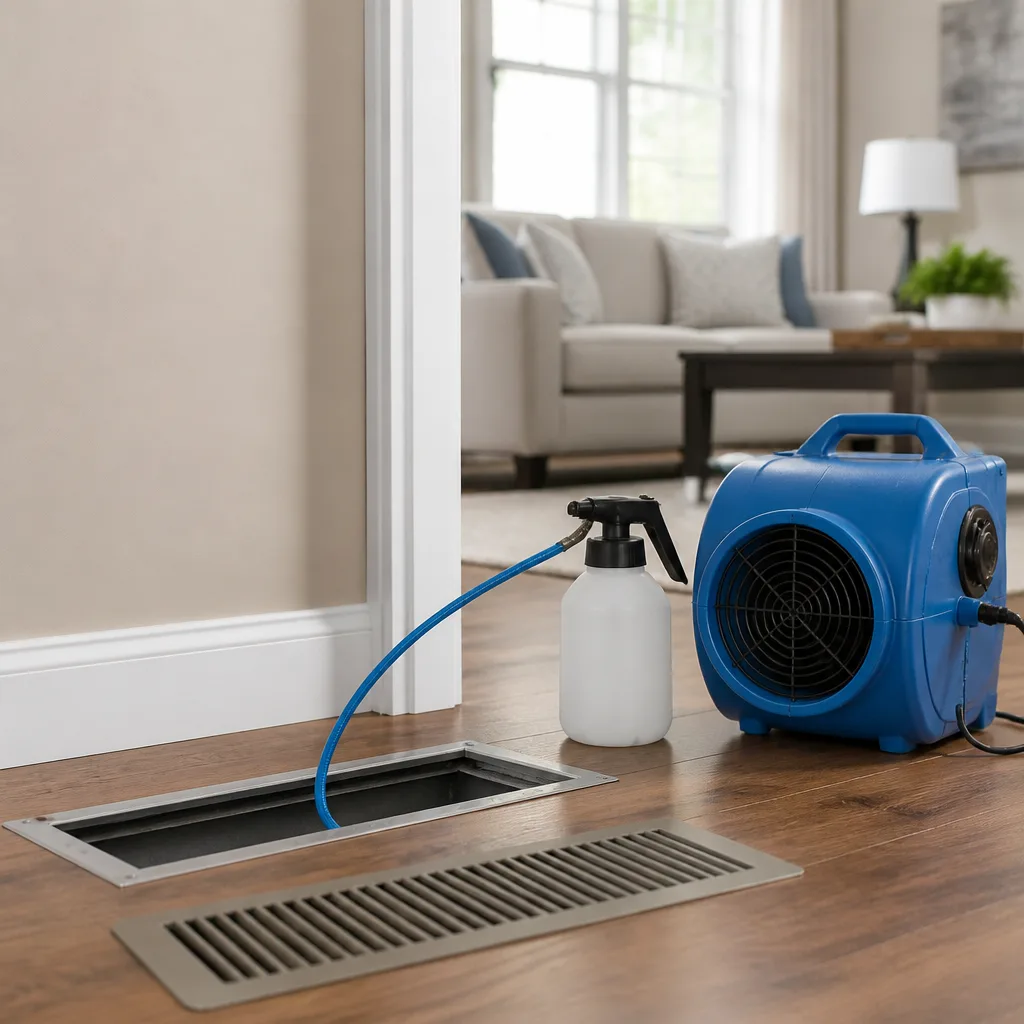 Sanitizing & deodorizing
Whole-system duct and dryer vent check with before-and-after photos - you see exactly what came out of your vents
That "$99 whole-house special" is a bait ad - the real number appears once they are in your hallway, or the "clean" is a shop-vac at the register. We photograph the inside of your ducts before and after instead.
Air Duct Cleaning Emergency Preparedness Guide for East Village Homes
After a kitchen fire, the instinct is to open the windows and wipe down the visible surfaces. It feels like enough. It isn’t. Smoke particulate that enters the duct system doesn’t leave when the windows close, and every time the HVAC runs, that contamination recirculates through every room in the apartment. The same logic applies to water intrusion, rodent activity and heavy renovation dust. The emergency is rarely the visible mess in the room; it’s what settled inside the system behind the walls.
This guide is for East Village residents who want a plan in place before they need one. We’ll walk through the four emergency scenarios that hit East Village duct systems most often, how to shut down circulation correctly, what to document for insurance, and how to tell emergency sanitizing from full remediation. Everything here is written from what we’ve seen working inside East Village buildings, from walk-ups off Avenue A to converted lofts near the Bowery.
Quick Answer
An emergency duct situation in East Village means you should shut off HVAC circulation first, open windows only if outdoor air quality allows, document everything with photos and a written timeline before anyone touches the system, and call a duct professional who can contain the contamination rather than push it around. Emergency sanitizing handles odor and microbial load after a small event. Full remediation is what you need after fire residue, standing water, or active rodent infestation has entered the ducts. Nothing about either process should be attempted with a shop vacuum or a box fan.
Styles & brands we work with
- Whole-home duct cleaning
- Dryer vent cleaning
- Camera inspection
- Sanitizing & deodorizing
Table of Contents
- The Four Emergency Scenarios That Hit East Village Duct Systems
- How to Shut Down HVAC Circulation Correctly
- What to Document for Insurance Before Any Cleaning Begins
- Emergency Sanitizing vs. Full Remediation: Which Do You Need?
- How to Vet an Emergency Duct Contractor Quickly
- East Village Building Factors That Change the Response
- Rebuilding Air Quality After the Emergency
- When to Call a Professional
The Four Emergency Scenarios That Hit East Village Duct Systems
An emergency duct situation is any event that introduces smoke, water, biological contamination, or large volumes of particulate into the HVAC system faster than normal filtration can handle. In East Village, four scenarios account for nearly all of them. Each has its own immediate response, and getting the order wrong makes the cleanup longer and more expensive.
1. Post-Fire and Smoke Infiltration
Fire residue travels further than most people expect. Even a contained kitchen fire pushes soot and combustion byproducts into return-air grilles, and from there into the ducts. Smoke odor that returns a week after the fire is usually not coming from the walls; it’s coming from porous duct liner and settled particulate that reactivates every time the system cycles. The immediate response is to keep the HVAC off, seal the grilles with plastic sheeting and tape, and leave the windows closed if the outdoor air carries smoke from the event. Professional cleaning comes next, and it needs to include sanitizing, not just mechanical agitation.
2. Flood and Water Intrusion
Water in a duct system is a mold timeline, not a cleanup task. Porous duct liner and insulation that stay wet beyond a short window begin colonizing quickly, and the HVAC then distributes spores through the whole apartment. In East Village, water events tend to come from above – a burst pipe in an upstairs unit, a roof leak in a converted tenement building, or a radiator failure in an older walk-up. If you suspect water has entered the ducts, keep the system off, document the moisture, and call for professional assessment before running the fan to “dry things out.”
3. Rodent Incursion
Mice and rats use duct chases as highways in dense East Village blocks, particularly in buildings with shared wall cavities and older construction. The damage isn’t just the animal itself. Droppings, nesting material and urine become airborne the moment the fan runs, and the smell is often the first sign that something is wrong. Never run the system after a rodent sighting inside a grille or return. The response involves cleaning, sanitizing and, critically, sealing the entry points so it doesn’t repeat.
4. Renovation Dust Events
Demolition and sanding in an East Village co-op or condo push fine particulate into every return the contractor didn’t seal. Drywall dust is abrasive and can damage blower motors, and renovation dust often carries silica. If a neighbor’s renovation or your own triggered heavy dust and the HVAC was running, plan on a full cleaning rather than a spot job. Air scrubbers and negative-air containment are the tools that make this manageable; a regular vacuum simply re-aerosols the dust.
How to Shut Down HVAC Circulation Correctly
Shutting down the system is the single most important step in the first ten minutes of an emergency. Correct shutdown means stopping air from moving through the ducts, which keeps contamination where it is instead of spreading it through every room. It does not mean opening every window or turning on a box fan; both of those can make things worse by pushing particulate into the supply side.
- Turn the thermostat to OFF. Not to “fan only,” not to a lower setpoint. OFF. If you have a heat pump or a split system with a separate fan control, turn that off too.
- Shut off the air handler at the breaker. In East Village apartments the air handler is often in a closet, a soffit or a utility chase. Find the breaker labeled for HVAC and flip it. If you can’t find it, this is a good time to ask your building’s super where the panel is.
- Seal the return grilles. Plastic sheeting and painter’s tape work. Seal the largest returns first. Don’t seal supply grilles unless you’re also stopping the system at the breaker; the pressure has to go somewhere.
- Close windows if outdoor air carries smoke or dust. Open them if the emergency is interior (like a bleach spill) and outside air is cleaner. Use your judgment, and check the local air quality reading if you can.
- Leave the system off until a professional has assessed it. This is the step people skip. Running the fan to “see if it clears up” is how contamination spreads back through a freshly cleaned apartment.
If you’re in a cooperative or condo building, notify the building manager immediately. In older East Village stock, shared duct chases and stacked risers mean one apartment’s contamination can affect neighbors, and a coordinated shutdown is safer than a unilateral one.
What to Document for Insurance Before Any Cleaning Begins
Documentation is the difference between a claim that gets paid and a claim that gets challenged. Insurance adjusters work from evidence, and duct contamination is invisible to anyone who wasn’t on site. The goal is to capture the state of the apartment and the HVAC system before a single grille comes off.
- Photograph every visible surface of every grille and return, with the date stamp on your phone.
- Photograph the thermostat state and the breaker position so the timeline is clear.
- Photograph the source of the event – the burnt cabinet, the stained ceiling, the chewed insulation, the wall the contractor cut into.
- Write a short timeline of what happened and when: the fire was noticed at X, the system was shut off at Y, the first call went out at Z.
- Save the air quality readings or notices that were relevant on that day, especially for smoke events.
- Keep every receipt for temporary measures – sheeting, tape, an air scrubber rental, a hotel night if the apartment wasn’t habitable.
- Ask the professional for a written post-service report that includes before-and-after photos, the equipment used, and the scope of work performed.
That last point matters more than people realize. A post-service report with before-and-after photos of the ducts themselves is often the only proof that the work needed doing and was done. We supply before-and-after photos as a standard part of the job, and we’d suggest treating a contractor who doesn’t offer them as a warning sign. If your insurer asks for a scope document, a report that names Abatement Technologies containment equipment, Rotobrush or Nikro cleaning systems, and the sanitizing products used will read as professional rather than ad hoc.
Emergency Sanitizing vs. Full Remediation: Which Do You Need?
Emergency sanitizing is a surface-level response that neutralizes microbial load and odor in a system that hasn’t suffered structural contamination. Full remediation is a containment-level process for systems that have been exposed to fire residue, standing water, or active biological contamination. Choosing the wrong one wastes money on the small end and leaves invisible contamination on the large end.
When Emergency Sanitizing Is Enough
- Mild, persistent musty odor with no known water event
- A single small cooking smoke event where the system was shut off promptly
- Recurring allergy symptoms that flare only when the HVAC runs
- Post-cleaning odor neutralization as part of a routine cleaning
When Full Remediation Is Required
- Any fire event that produced visible soot, even if the fire was contained
- Standing or persistent moisture in ducts, insulation or air handler
- Confirmed rodent or pest activity inside the system
- Visible mold growth on grilles, boots or duct interiors
- Renovation dust events where the system was running during demolition
The distinction matters because remediation uses negative-air containment and HEPA filtration to keep contaminants out of the living space while they’re being removed. Abatement Technologies equipment is built for that job. Sanitizing without containment on a contamination event just spreads the load before you neutralize it. As a rule of thumb: if you can name a source event, you’re probably in remediation territory. If you can’t, sanitizing is the place to start after a professional inspection.
For the standard cleaning side of the work, our air duct cleaning service covers both, and duct repair and sealing is included so any leaks found during the job get fixed in the same visit rather than referred out.
How to Vet an Emergency Duct Contractor Quickly
Emergency timing doesn’t excuse skip-the-basics vetting. What it excuses is depth of due diligence – you’re not going to call five references in the next two hours. You can still confirm the things that separate a professional response from a bait-and-switch.
- Ask what equipment they bring. A purpose-built duct cleaning system from Rotobrush or Nikro is a fundamentally different tool than a shop vacuum with a hose attachment. If they can’t name their equipment, keep calling.
- Ask whether they can contain the work. For fire, water or rodent events, negative-air containment is the difference between safe and sorry. Abatement Technologies-grade equipment is the standard to look for.
- Ask if they’ll provide a written scope and flat price before work begins. One flat price per system, agreed in writing. A per-vent quote or a teaser coupon rate is a red flag.
- Ask for before-and-after photos of your own ducts, not stock images. This is your proof of work.
- Ask whether they can repair and seal on the same visit. Finding a leak during cleaning and having to schedule a second contractor is a common way these jobs stretch out over a week.
- Verify they’re licensed and insured as New York requires. Ask for the certificate of insurance before anyone enters your building. Your co-op or condo board will require it.
One more thing: ask them to put the scope in writing. “We’ll clean the ducts” isn’t a scope. “Full cleaning of supply and return, sanitizing of all runs, sealing of identified leaks at joints and boots, before-and-after photos, post-service report” is. If a contractor won’t commit that to paper, that’s your answer.
East Village Building Factors That Change the Response
East Village buildings are not a uniform category, and the emergency response plan needs to match the building. A 19th-century walk-up off East 4th Street with steam radiators has almost nothing in common with a new-construction condo tower near the Bowery, and treating them the same is how problems get missed.
Pre-War Walk-Ups and Tenements
In older East Village walk-ups, the HVAC setup is usually a mix of window units, split systems and, in renovated units, low-velocity or high-velocity mini-duct systems. Ductwork in these buildings is often short, flexible runs through wall cavities and soffits, and access is genuinely difficult. Rodent incursions concentrate in the shared wall chases, and water damage from above is common because a single plumbing failure can serve several stacked apartments. The response needs to include coordination with neighbors and the building manager.
Co-ops and Condos
Co-op and condo boards in East Village require proof of insurance and, often, board approval before a contractor can work inside the unit. Emergency work usually gets a fast-track approval, but the paperwork still has to be filed. Get the certificate of insurance early.
Renovated Lofts and Commercial Conversions
Converted lofts near Astor Place and the Bowery tend to have longer duct runs and higher airflow, which means contamination spreads faster and further. If a renovation dust event hits one of these systems, expect the response to include more containment and a longer cleaning window.
Basement and Garden-Level Units
Garden-level units in East Village are the first to see water intrusion during heavy rain, and their duct runs sit closest to the moistest part of the building. Any water event in a garden-level unit should trigger a full duct assessment, not just a mop-up.
Rebuilding Air Quality After the Emergency
The cleaning and sealing gets the system back to baseline. It doesn’t make the apartment’s air quality better than it was before the emergency. If the event revealed that the existing filtration was undersized or that there was no real sanitizing step in the routine, the recovery is the moment to fix it.
This is where the gap between a duct cleaner and an indoor air quality specialist matters. Air Duct Cleaning East Village installs and services Honeywell and Aprilaire whole-home air quality products, which means a filtration or humidity upgrade can be specified in the same visit that does the cleaning and sealing, rather than scheduled for a second contractor a month later. That’s the full chain from cleaning to sealing to sanitizing to upgraded filtration without anyone subcontracted out.
For the HVAC side of the recovery, our HVAC cleaning service covers the blower, coil and cabinet so the system that moves the air is as clean as the ducts it moves it through. If the event involved lint buildup, a clogged exhaust or a dryer fire scare, dryer vent cleaning should be part of the same recovery window. And for the overall framework that ties all of this together, our air duct cleaning East Village overview is the place to start if you’re building out a preventive plan rather than responding to an active emergency.
Common Mistakes to Avoid
- Running the HVAC to “clear the air.” It does the opposite. The fan distributes contamination through every supply run in the apartment. Shut the system off at the breaker first, then call.
- Using a shop vacuum on duct interiors. Consumer vacuums don’t have the CFM, the filtration or the agitation to move settled particulate, and they re-aerosol the fine dust that’s the actual health concern. Purpose-built equipment exists for a reason.
- Skipping documentation to save time. In East Village co-op and condo buildings, insurance claims get challenged more often than people expect. Photos and a written timeline taken in the first hour are worth more than anything you can reconstruct later.
- Accepting a per-vent price quote. Per-vent pricing rewards contractors for finding more vents and punishes you for a smaller apartment. One flat price per system, agreed in writing before work begins, is the honest structure.
- Cleaning without sealing. A duct system with open joints and disconnected boots will re-contaminate within weeks of a thorough cleaning. Repair and sealing belong in the same visit, not on a follow-up schedule.
- Treating a fire event as a surface cleaning. Soot in supply runs and porous liner doesn’t leave because the walls got wiped. If there was any visible smoke, the ducts need professional attention.
- Not telling the building. Shared duct chases, stacked risers and common HVAC equipment in older East Village buildings mean your emergency can become your neighbor’s. Notify the building manager in the first conversation.
See the difference
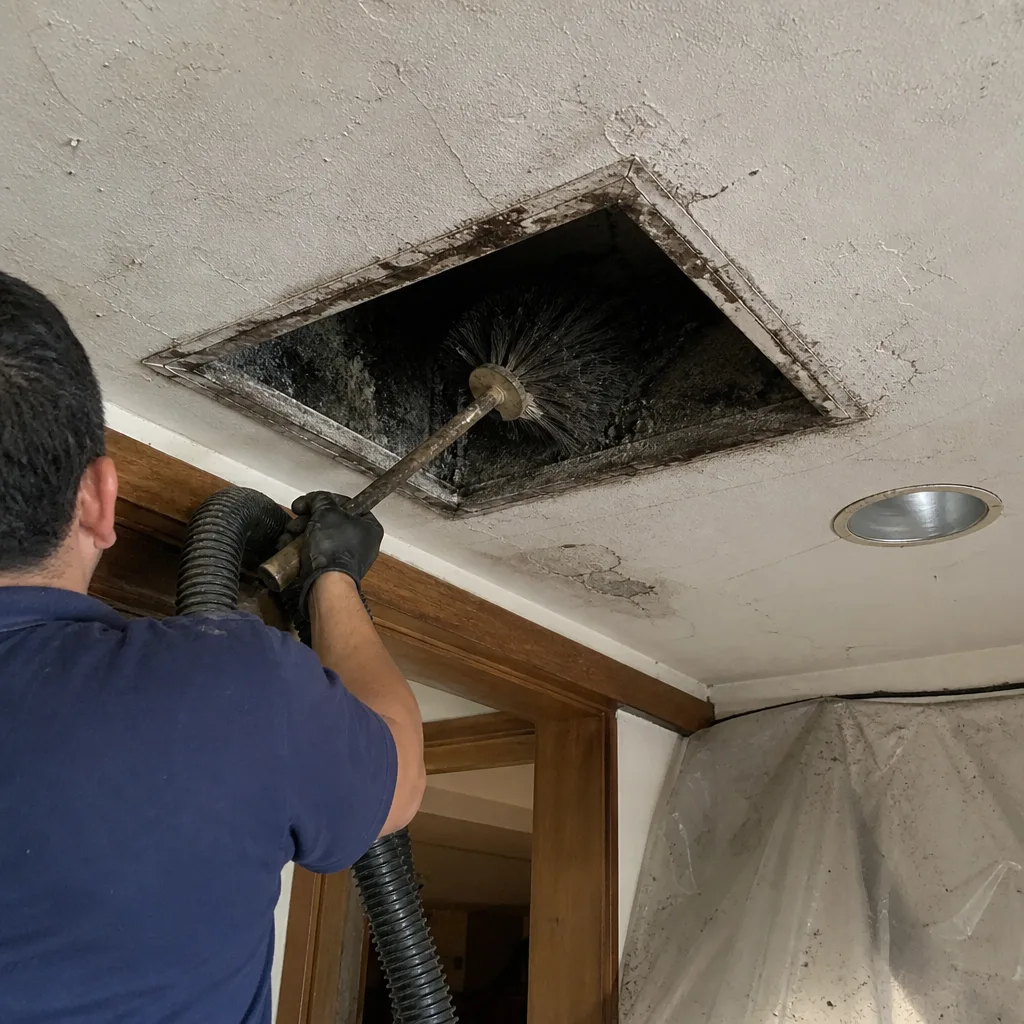 Before
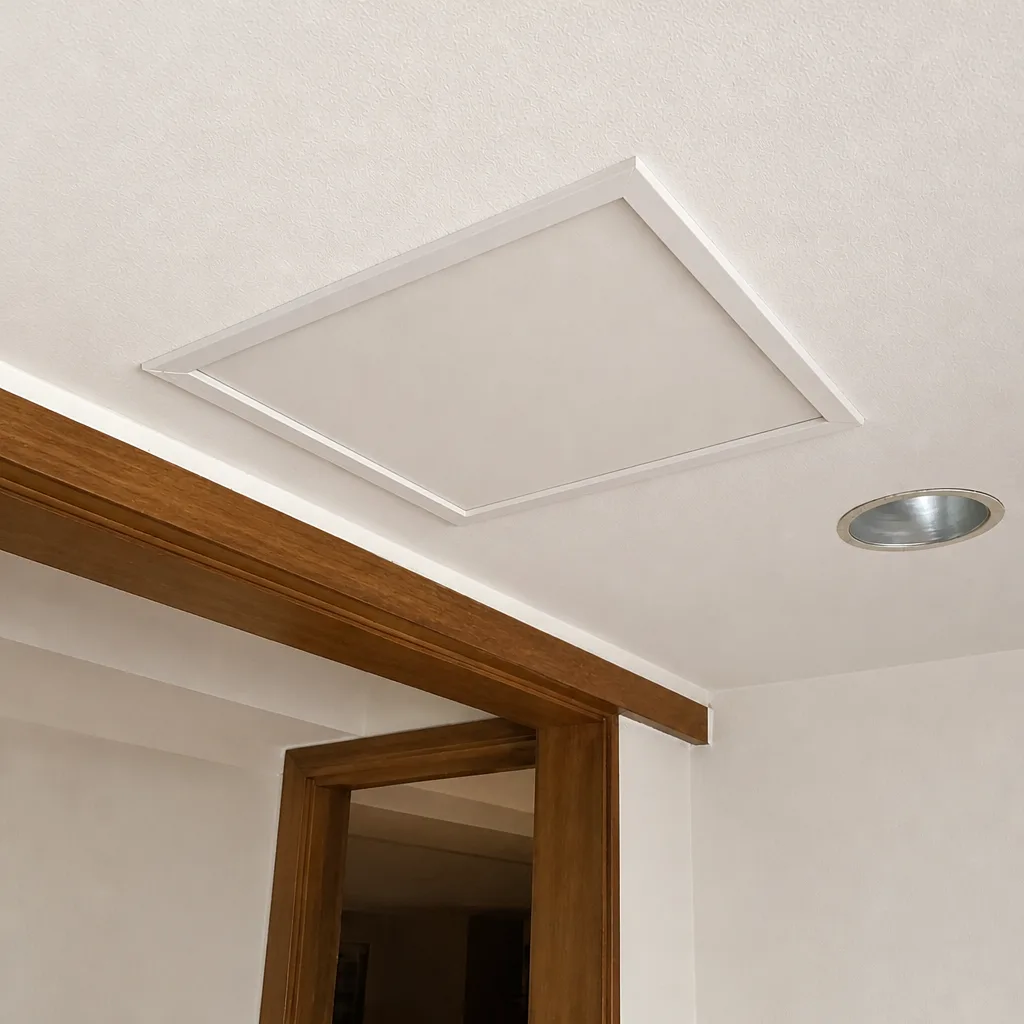 After
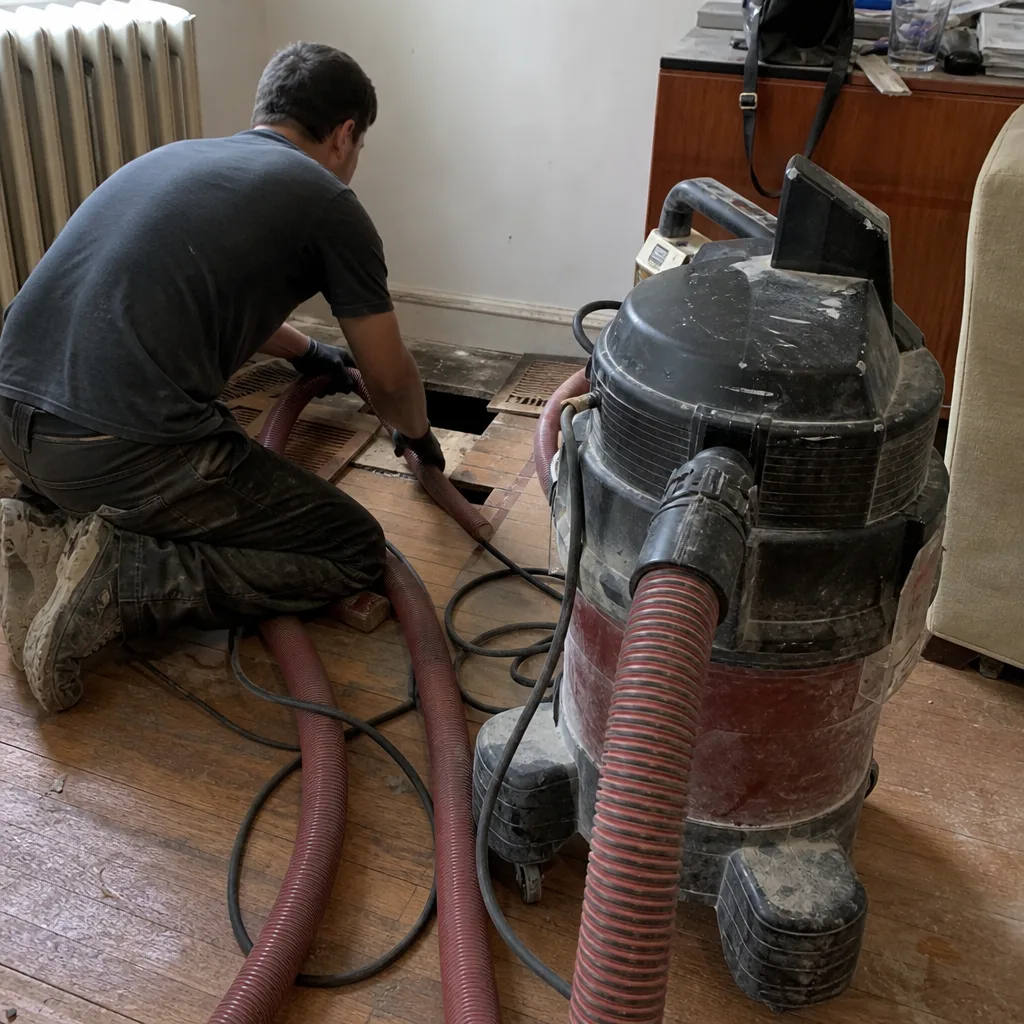 Before
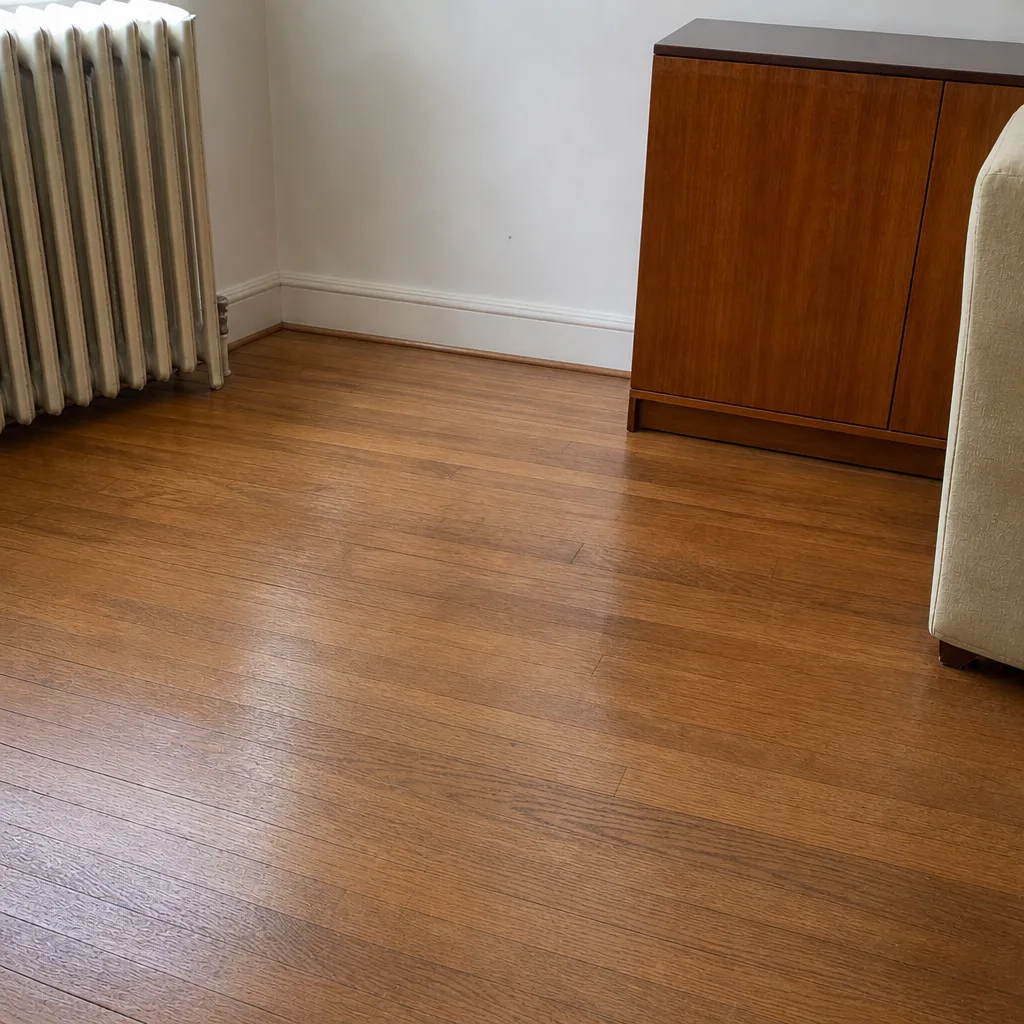 After
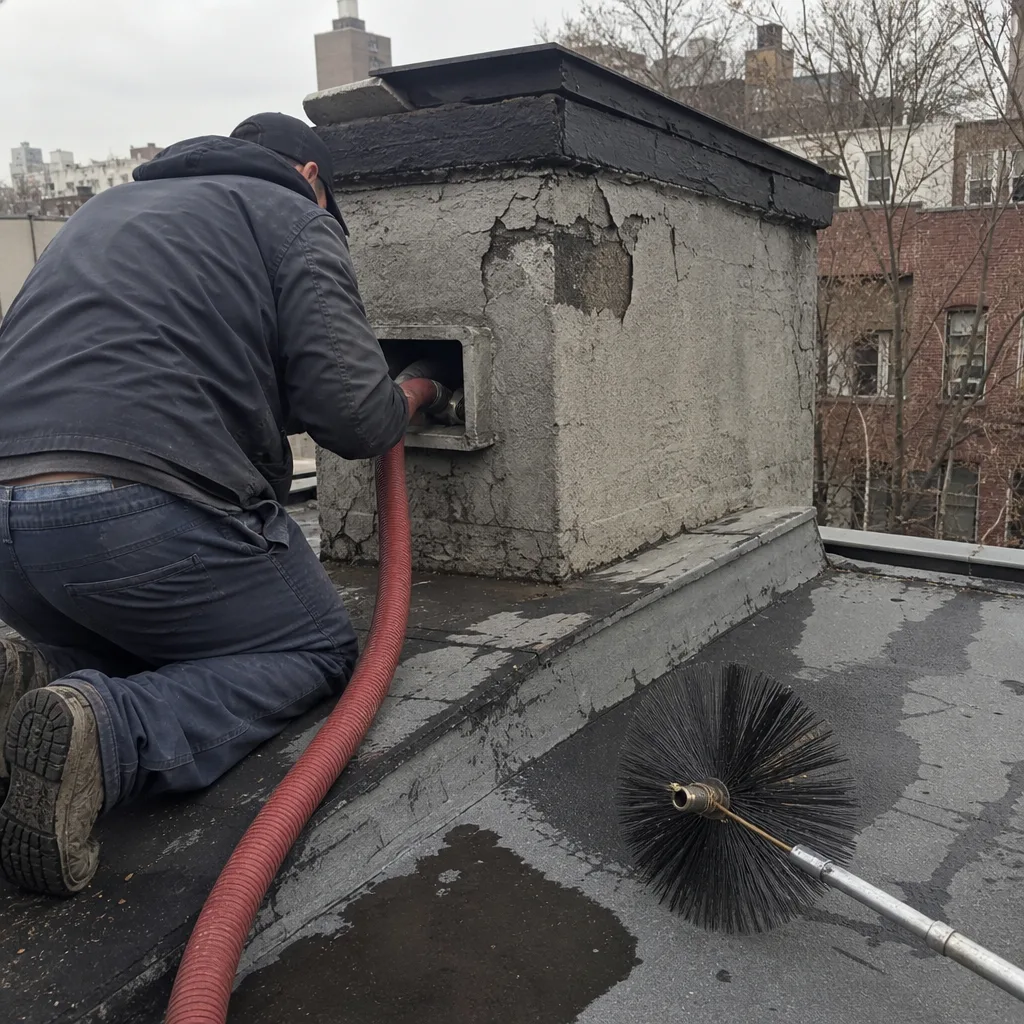 Before
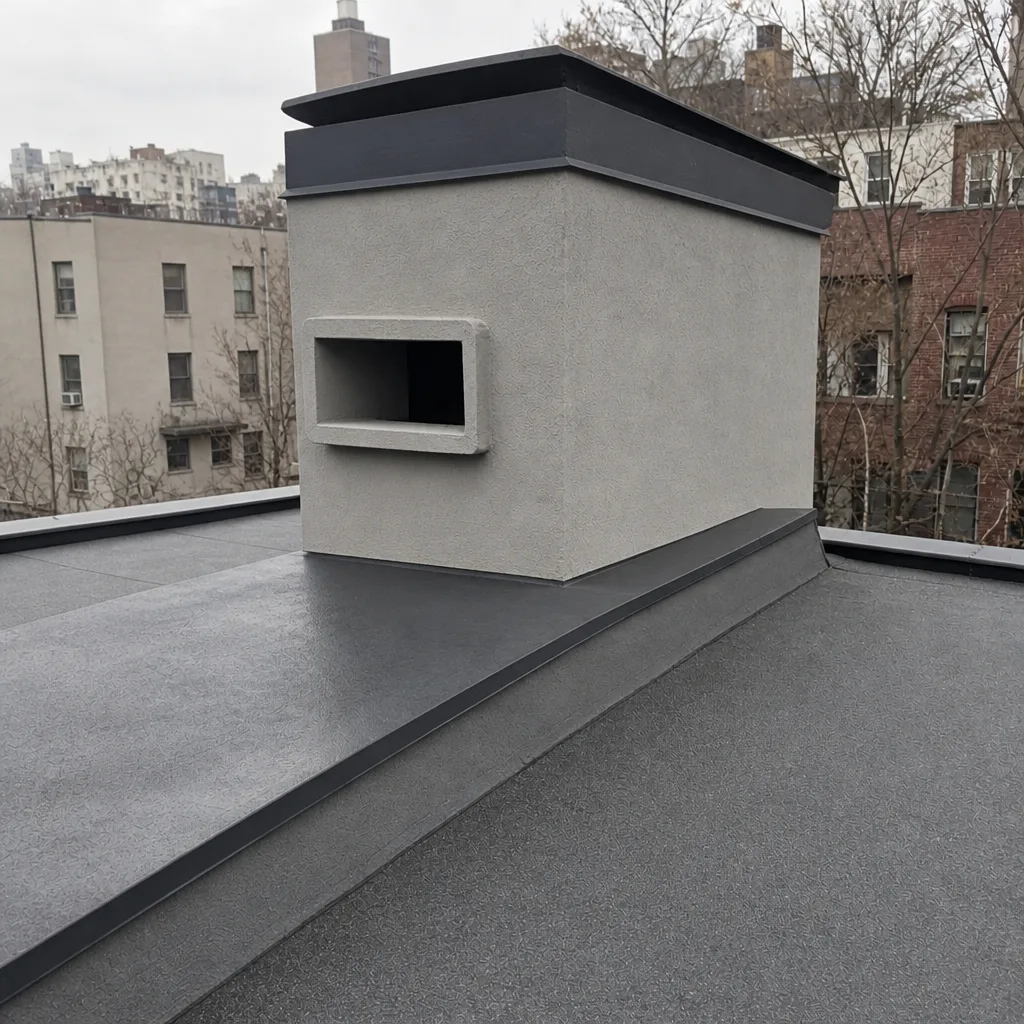 After
When to Call a Professional
Call a professional duct service when there’s been a source event – fire, water, rodent, or heavy renovation dust – and the HVAC system was running at the time or has been running since. Call when you smell something musty or acrid that comes and goes with the system cycle. Call when you see visible dark staining around a return grille or find droppings anywhere near a duct boot. Call when anyone in the apartment has developed new respiratory symptoms that track with the HVAC. Call before you use a shop vacuum on a return, not after.
The right response for an emergency is not a coupon and a same-day van – it’s a written scope, containment-grade equipment, repair and sealing in the same visit, and before-and-after photos you can hand to an insurer. Air Duct Cleaning East Village offers free estimates in East Village. Our technicians have up to 15 years of experience, and we bring professional-grade Rotobrush and Nikro systems and Abatement Technologies containment equipment to the job. Call (855) 952-0316. We answer 24/7. Fast dispatch from 7am to 7pm, Sunday through Friday.
Frequently Asked Questions
Turn the HVAC off at the thermostat and, if possible, at the breaker, then seal the return grilles with plastic and tape. Keeping air from circulating is the single most important step because it stops contamination from spreading into every room. After that, document the situation with photos and call a professional.
Emergency air duct cleaning in East Village depends on the scope, but you should expect a written flat price per system rather than a per-vent rate. Full remediation after a fire, water event or rodent incursion costs more than routine cleaning because it involves containment equipment, sanitizing and often sealing. Call (855) 952-0316 for an exact quote – estimates are free.
Cheap emergency quotes usually mean a shop vacuum, no containment and a per-vent price that grows as the technician “finds” more vents. That’s the bait-and-switch reputation this industry carries. A real scope names the equipment, the containment protocol, the sanitizing step and the sealing work, and it’s agreed in writing before anyone starts.
Before-and-after photos of your own ducts, not stock images, plus a written post-service report that lists the equipment used and the scope completed. That’s the standard we work to, and it’s the same document that supports an insurance claim if you’re filing one.
Routine cleaning every few years is reasonable for most East Village apartments, but the schedule is dictated by events more than a calendar. Any source event – fire, water, rodents, heavy renovation dust – resets the clock. Allergy flare-ups, new musty smells and visible staining around grilles all justify a professional inspection regardless of the calendar.
No. Consumer vacuums lack the airflow, filtration and agitation to remove settled particulate, and they re-aerosol the fine dust that’s the actual health concern. They can also damage flexible duct liner in older East Village units. Leave duct interiors to purpose-built equipment.
The Bottom Line
The difference between a routine duct cleaning and an emergency response comes down to three things: stopping circulation first, documenting everything for the record before anyone touches the system, and using a contractor whose equipment and scope match the severity of the event. Emergency sanitizing is enough for minor odor and allergy triggers. Fire, water, rodents and renovation dust need full remediation with containment. In an East Village apartment building, the response also has to account for shared duct chases, stacked risers and building management, which is why the plan should exist before you need it. Clean ducts, better air – here’s how we get there.
If you’re in the middle of an emergency or you just want a preventive inspection before the next one, call Air Duct Cleaning East Village at (855) 952-0316. We answer 24/7. Fast dispatch from 7am to 7pm, Sunday through Friday. Estimates are free, and the price is set per job by the written estimate, one flat price per system.
Written by the team at Air Duct Cleaning East Village.