
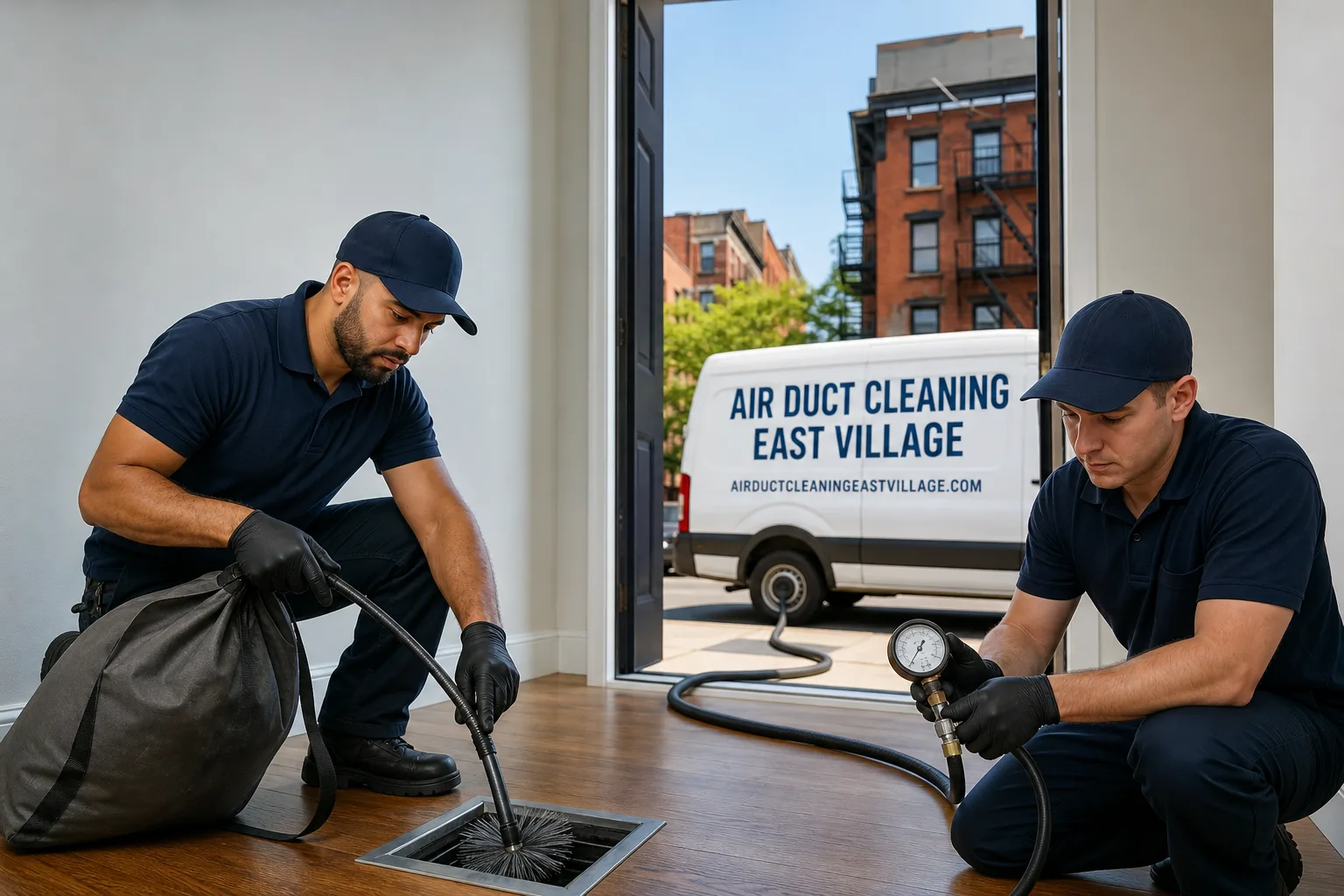
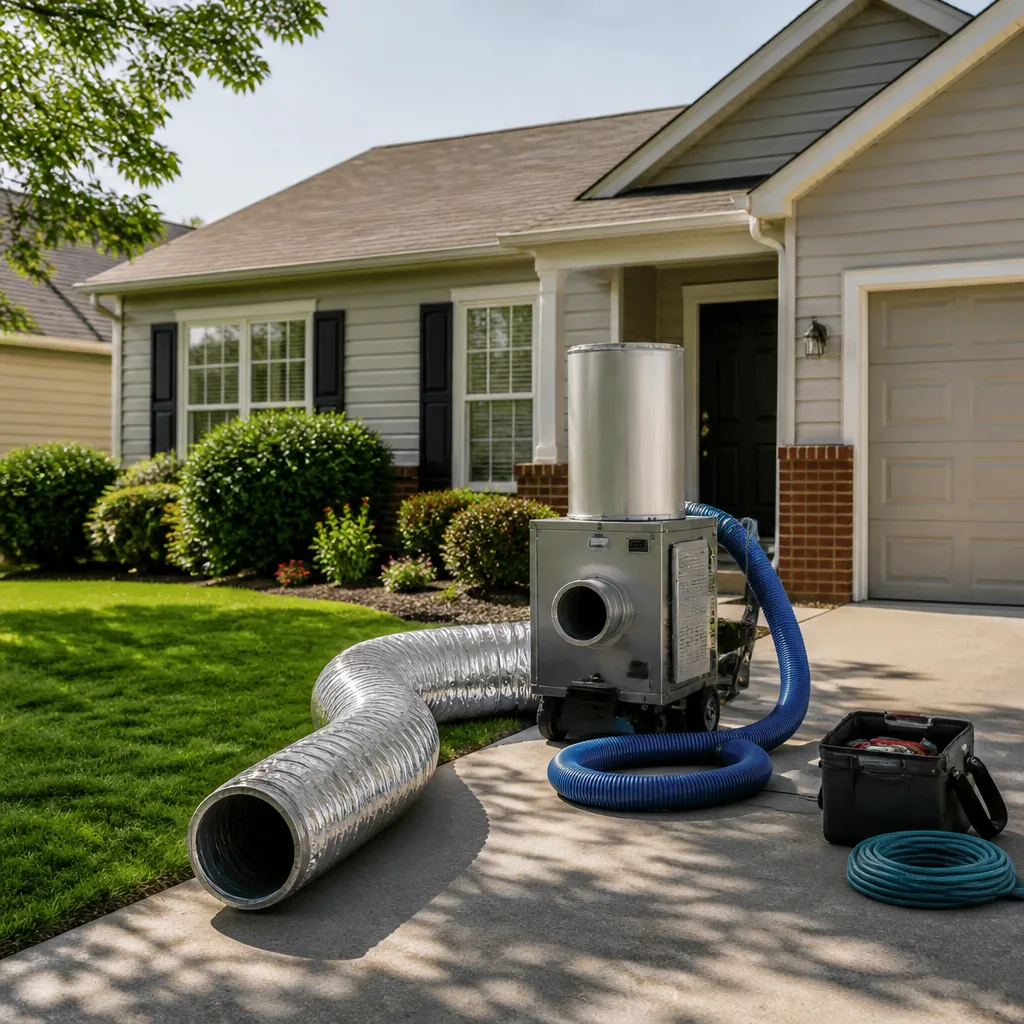
 Whole-home duct cleaning
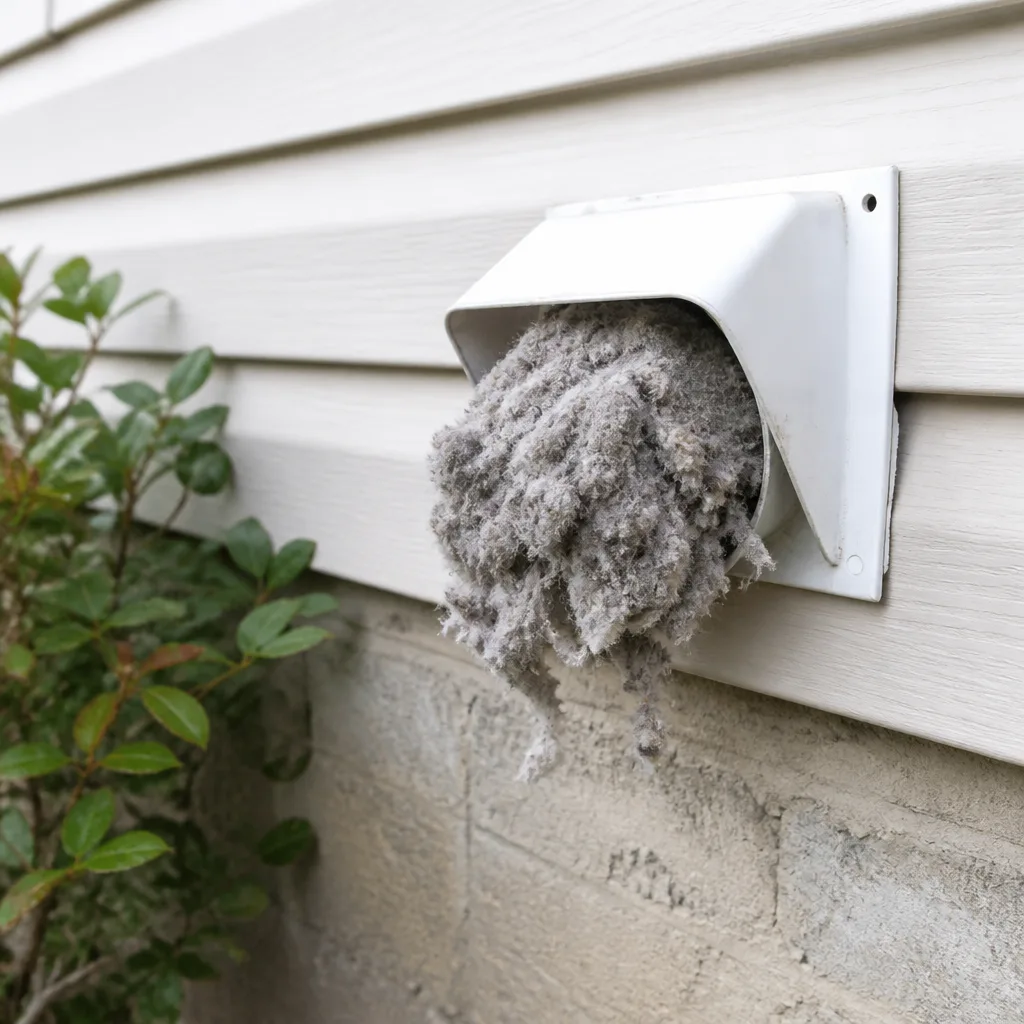 Dryer vent cleaning
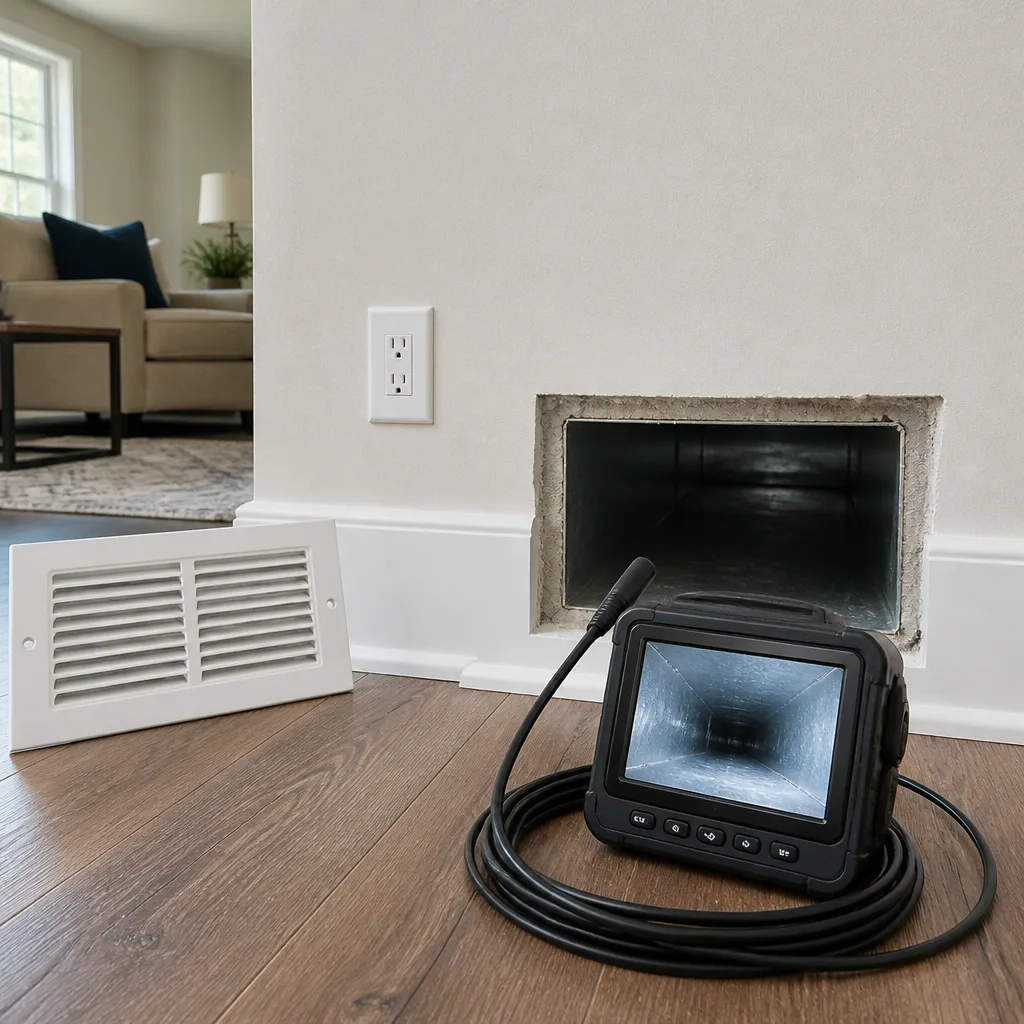 Camera inspection
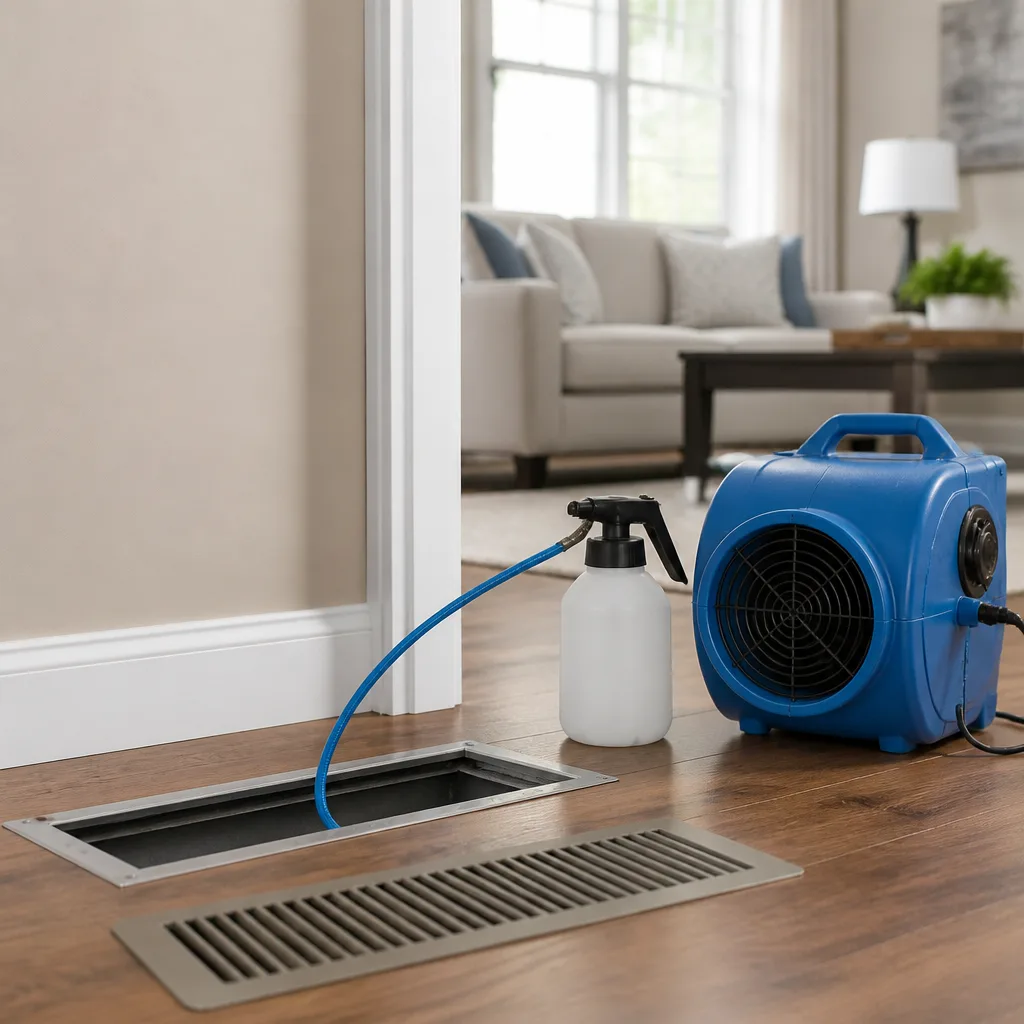 Sanitizing & deodorizing
Whole-system duct and dryer vent check with before-and-after photos - you see exactly what came out of your vents
That "$99 whole-house special" is a bait ad - the real number appears once they are in your hallway, or the "clean" is a shop-vac at the register. We photograph the inside of your ducts before and after instead.
Fast, Reliable Air Quality & Sanitizing Across Long Island City
If you live in a Long Island City high-rise and the air in your unit still smells like drywall dust or turns musty every July, you’re not imagining it. The towers along the East River waterfront were built fast, and a lot of that new ductwork was sealed up before anyone ran a first cleaning. We handle air quality and sanitizing across Long Island City with professional-grade equipment, and we scope the work so it actually solves the problem at the source. Call (855) 952-0316 for a free estimate. We answer 24/7, with fast dispatch from 7am to 7pm, Sunday through Friday.
Why Long Island City Residents Call Air Duct Cleaning East Village for Air Quality & Sanitizing
Long Island City is not a single-family neighborhood, and air quality work here reflects that. A condo in one of the Court Square towers and a converted loft inland on the 11101 side are two very different jobs, and we quote them differently rather than pretending there’s one standard package. The technicians we connect you with have up to 15 years of experience, much of it in dense residential buildings where the duct run goes up a shaft instead of across a ceiling.
What earns repeat work in Long Island City is documentation. When you can’t see inside the ducts, the proof has to be on paper and on camera. We come back with before-and-after photos of your own riser drop and registers, a written record of what was applied, and a scope agreed in advance. Property managers in the towers here ask for that paper trail because they answer to a board or a building owner. Homeowners ask for it because they’ve been burned by a cheap quote that turned into a bigger invoice once the technician was on site. Our answer to that is simple: one flat price per system, agreed before work begins.
Response time to Long Island City is quick because it’s close to our East Village base. We can reach the waterfront towers, Court Square, and the inland blocks without a long drive, which matters when you’re coordinating with building management on an access window and a service elevator booking.
Styles & brands we work with
- Whole-home duct cleaning
- Dryer vent cleaning
- Camera inspection
- Sanitizing & deodorizing
Our Air Quality & Sanitizing Services in Long Island City
Air quality work in Long Island City’s towers is rarely a one-unit task. Vertical duct risers and shared rooftop air handlers mean your air is tied to your neighbors’, and the work has to be scoped from the line’s riser to your registers. Here’s how we approach the core services in buildings like these.
Mold Treatment
Our humid coastal climate and cold winters create real condensation risk inside duct systems, and rooftop air handlers are where it usually shows up first. Mold treatment in Long Island City means finding the moisture source, not just wiping the visible growth off a register. We treat the affected run, then address why it came back. In the newer glass towers, that often means looking at how the rooftop unit handles humidity through the summer.
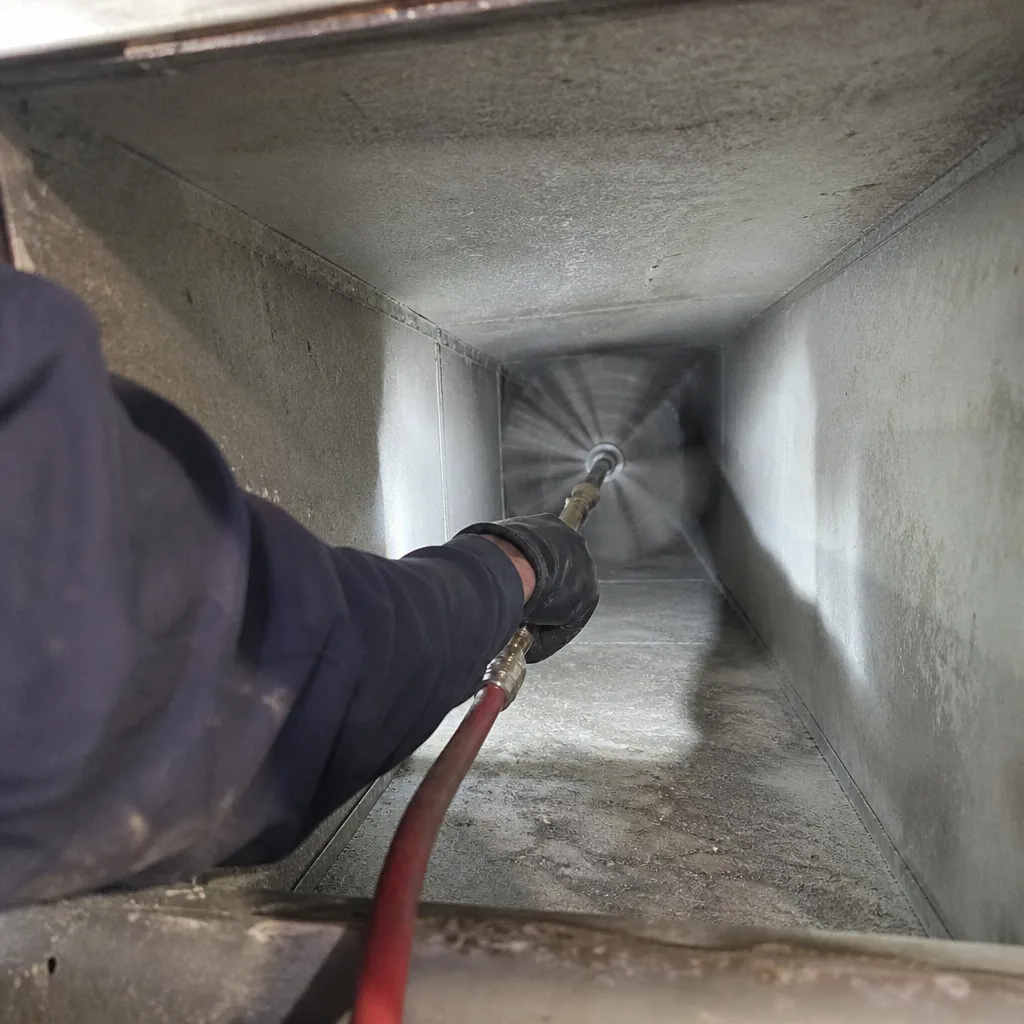
UV Light Installation
A UV light at the air handler keeps the blower motor and coil from reseeding mold into the line after treatment. In Long Island City’s stacked-riser buildings, that placement matters: the rooftop unit serves many units, so the light goes where the contamination originates. We install and service Honeywell and Aprilaire systems directly, bridging the gap between a one-time cleaning and ongoing air quality improvement.
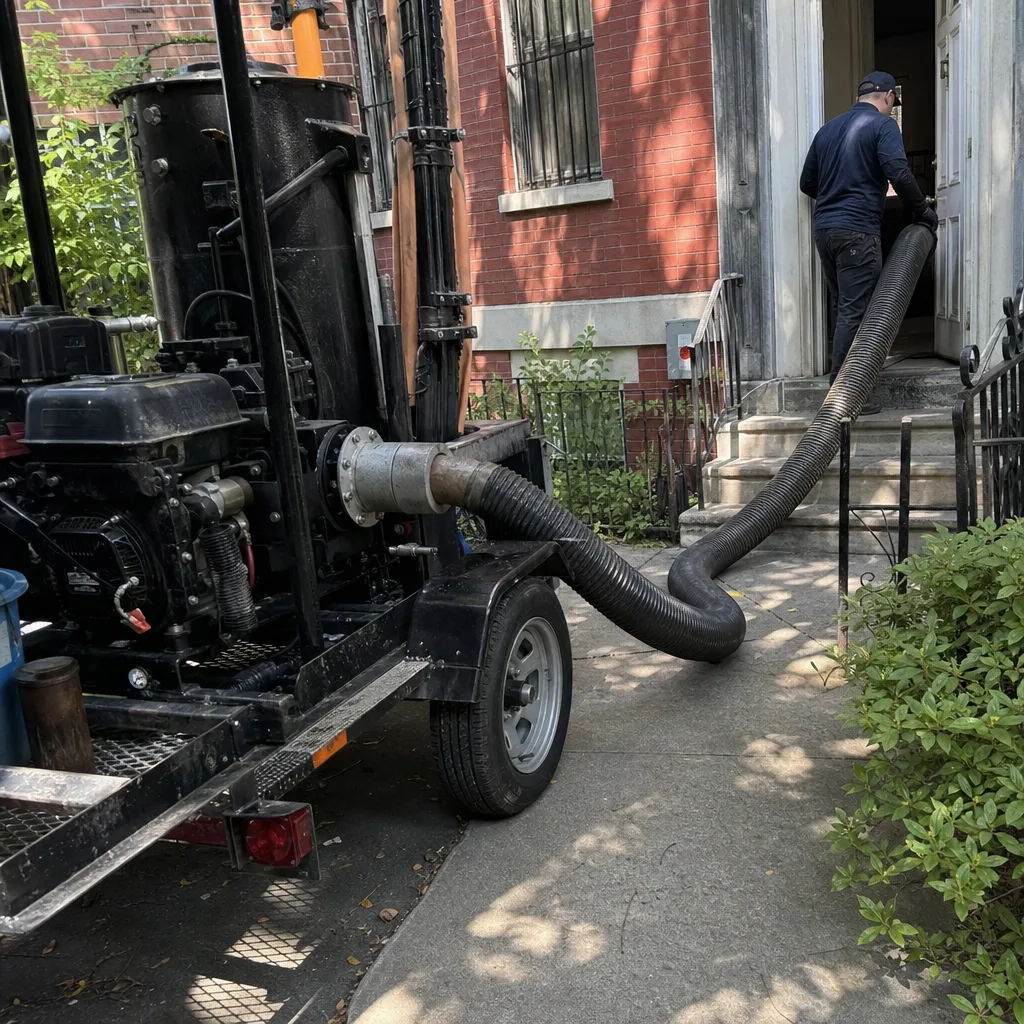
Bacteria Sanitizing
Sanitizing supply and return ducts in a shared riser has to be coordinated, not done unit by unit in isolation. If you treat one condo without addressing the building-wide line through management, contamination simply settles back down the shaft. We work with building management to define a shared scope, then sanitize the line properly. That’s what makes the difference between air that stays clean and air that smells fresh for a week.
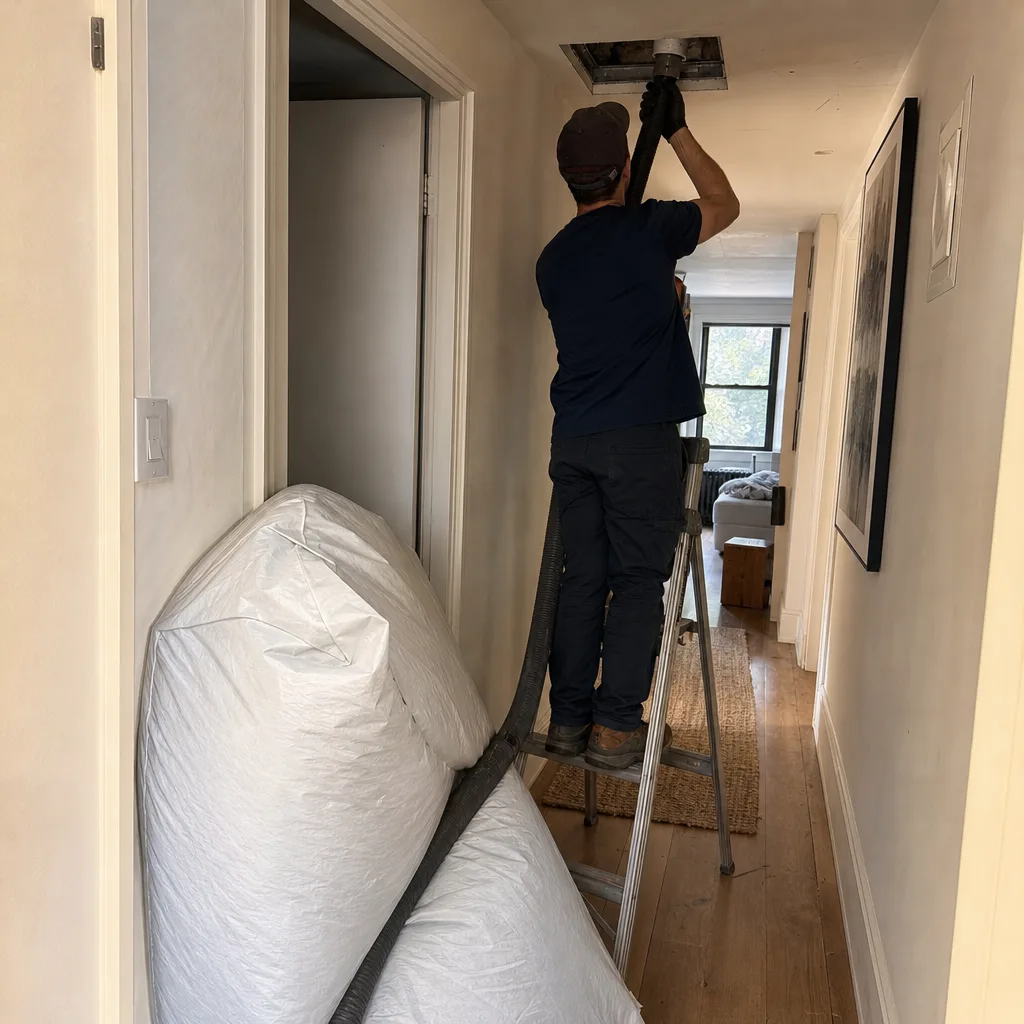
Odor Removal
Persistent drywall-and-silica odor in a newly occupied unit is one of the most common complaints we hear in Long Island City. Construction debris sealed into fresh ductwork before occupancy keeps shedding grit and smell at the registers long after move-in. Odor removal means pulling that material back to the source with agitation tools and HEPA filtration, then sanitizing before the registers go back on. Odor treatment without source removal just masks it.
Our air quality & sanitizing team handles the full chain: clean ducts, repaired or sealed ducts, sanitized air, and upgraded filtration, so you’re not juggling three contractors.
Trusted Brands We Service in Long Island City
We work with Rotobrush and Nikro professional-grade duct cleaning systems, purpose-built equipment used by commercial HVAC contractors rather than consumer vacuums. For containment-level air quality work we bring Abatement Technologies equipment, and for whole-home air quality products we supply and install Honeywell and Aprilaire. That matters in Long Island City’s towers, where a cleaning job can escalate into a containment-grade project the moment a riser turns out to be shared. Because we can diagnose, clean, and upgrade filtration under one provider, you get a faster turnaround and one point of contact through building management. We don’t stock parts or claim brand partnerships we can’t back up. The equipment is on hand, and the work is documented.
Common Air Quality & Sanitizing Problems We See in Long Island City Homes
- Construction dust sealed into fresh ductwork. In the newer towers, units that look clean still shed grit and silica odor at the registers because no first cleaning happened before occupancy. It’s a backlog problem, not a hygiene problem.
- Shared vertical risers treated unit by unit. Sanitizing one condo without coordinating the building-wide line through management just pushes contamination back down the shaft. The scope has to start at the rooftop unit and run down the line.
- Mold returning at the rooftop air handler and coil. Humid coastal summers feed condensation inside duct runs, and cleaning the registers alone won’t stop it. UV and moisture control at the source are what hold the result.
- Seasonal pollen and construction-site dust drawn in from the waterfront. With near-constant new tower construction along the East River, outdoor particulate loads are high, and a poorly filtered system pulls them straight into the living space.
Pricing for Air Quality & Sanitizing in Long Island City, NY
Air quality pricing here is set per system, not per vent, because a tower unit with a shared riser is a different scope than a single-family home. Typical ranges for Long Island City:
- Mold treatment on a duct run: typically $400 – $1,200 depending on how far the affected line extends from the air handler.
- UV light installation at the air handler: typically $350 – $750, including the unit and labor.
- Bacteria sanitizing of supply and return ducts: typically $300 – $700 for a single unit in a tower, more when a shared riser is scoped through building management.
- Odor removal with source agitation and HEPA filtration: typically $450 – $1,100, since a first-cleaning backlog on new ductwork takes longer.
A combined mold treatment and UV installation usually runs less than the two services quoted separately, and we’ll tell you when that’s the case. The written estimate sets the final price. Estimates are free, and we agree on one flat price per system before work starts.
See the difference
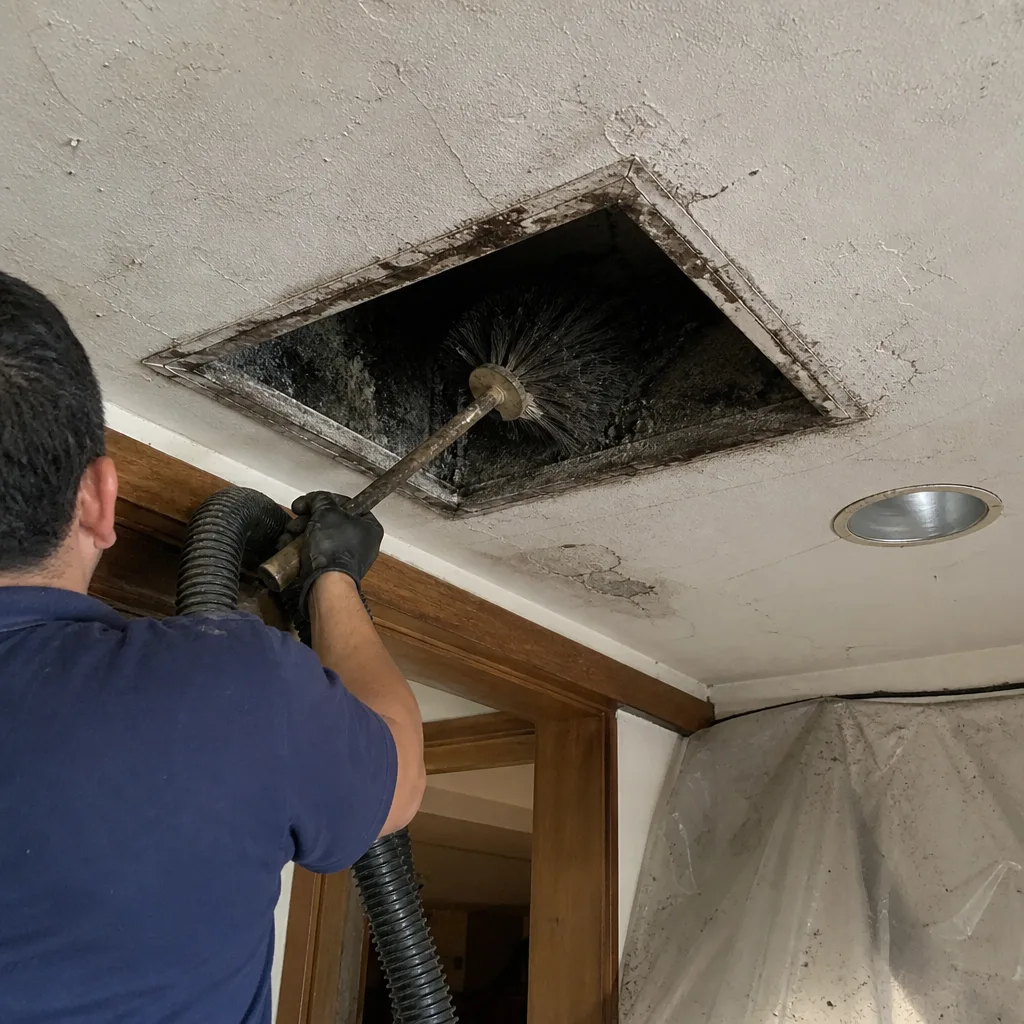 Before
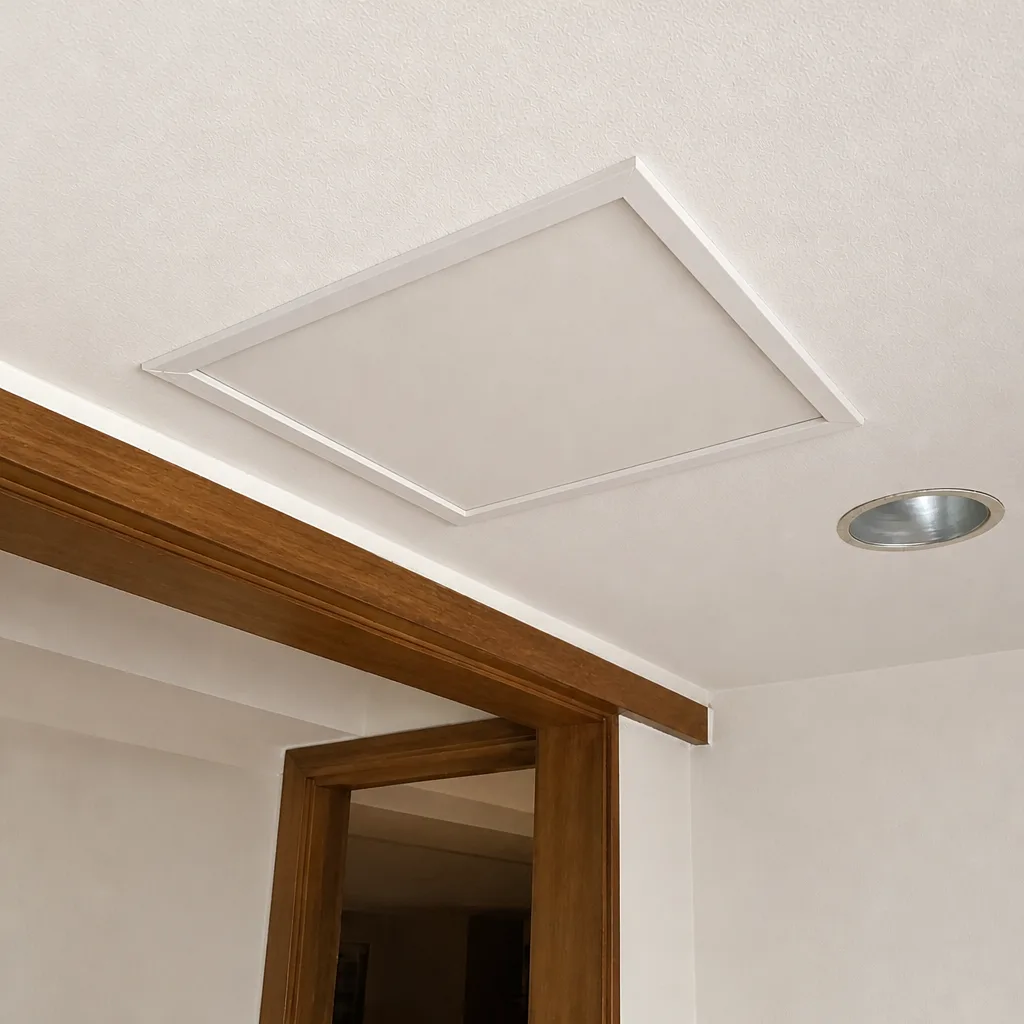 After
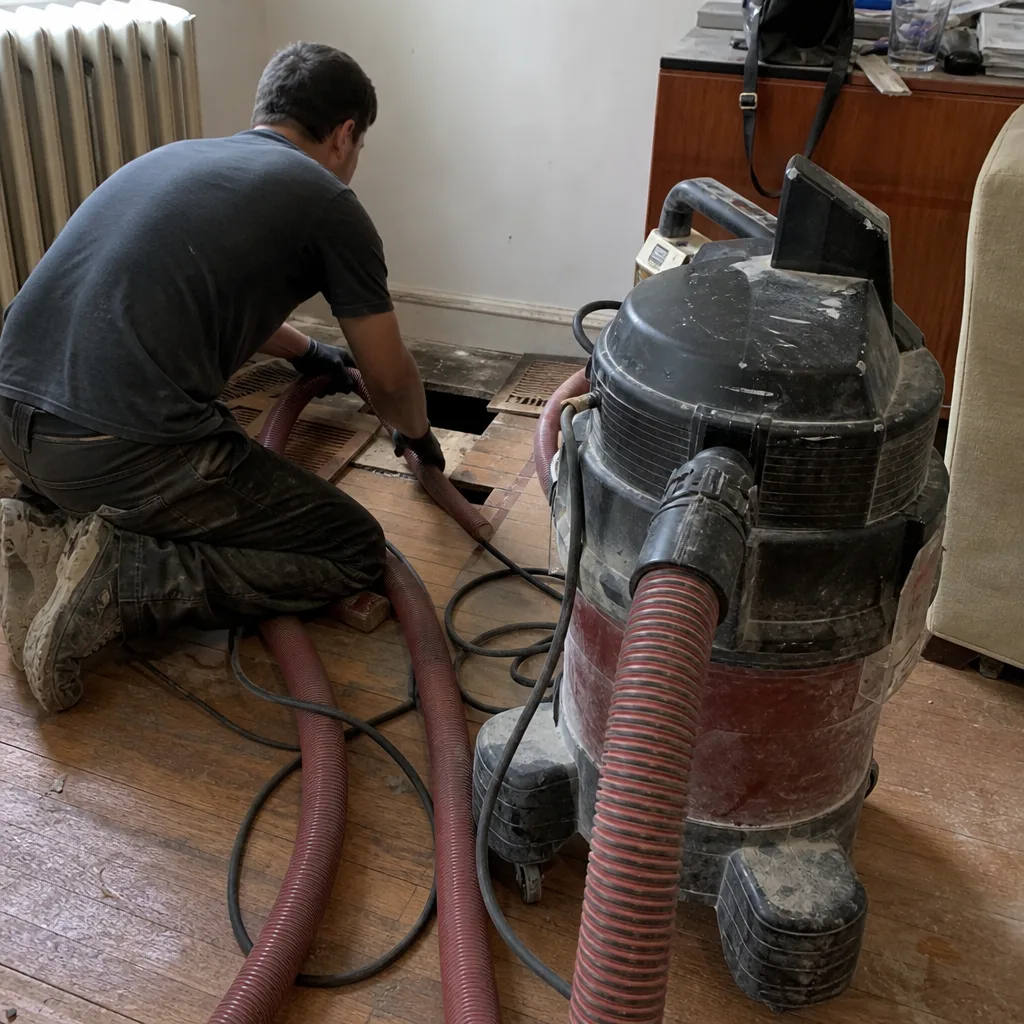 Before
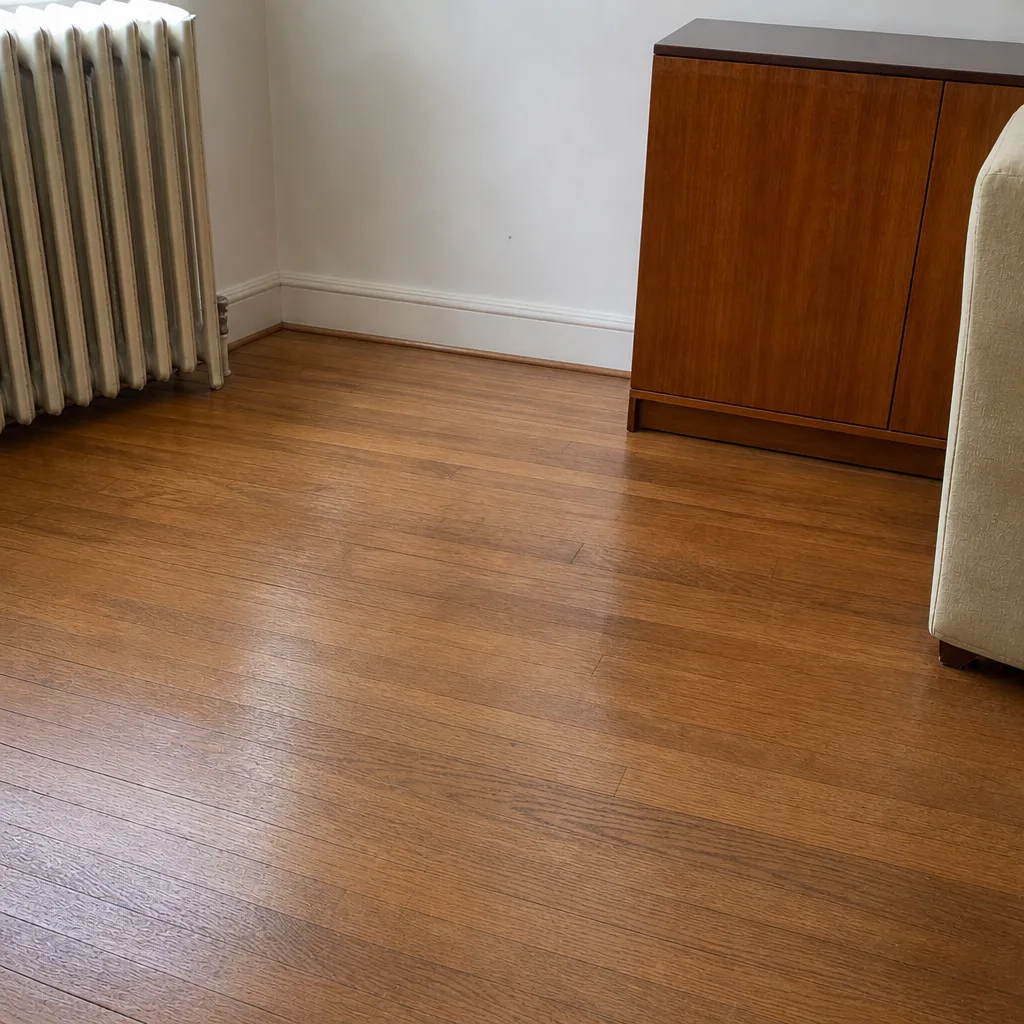 After
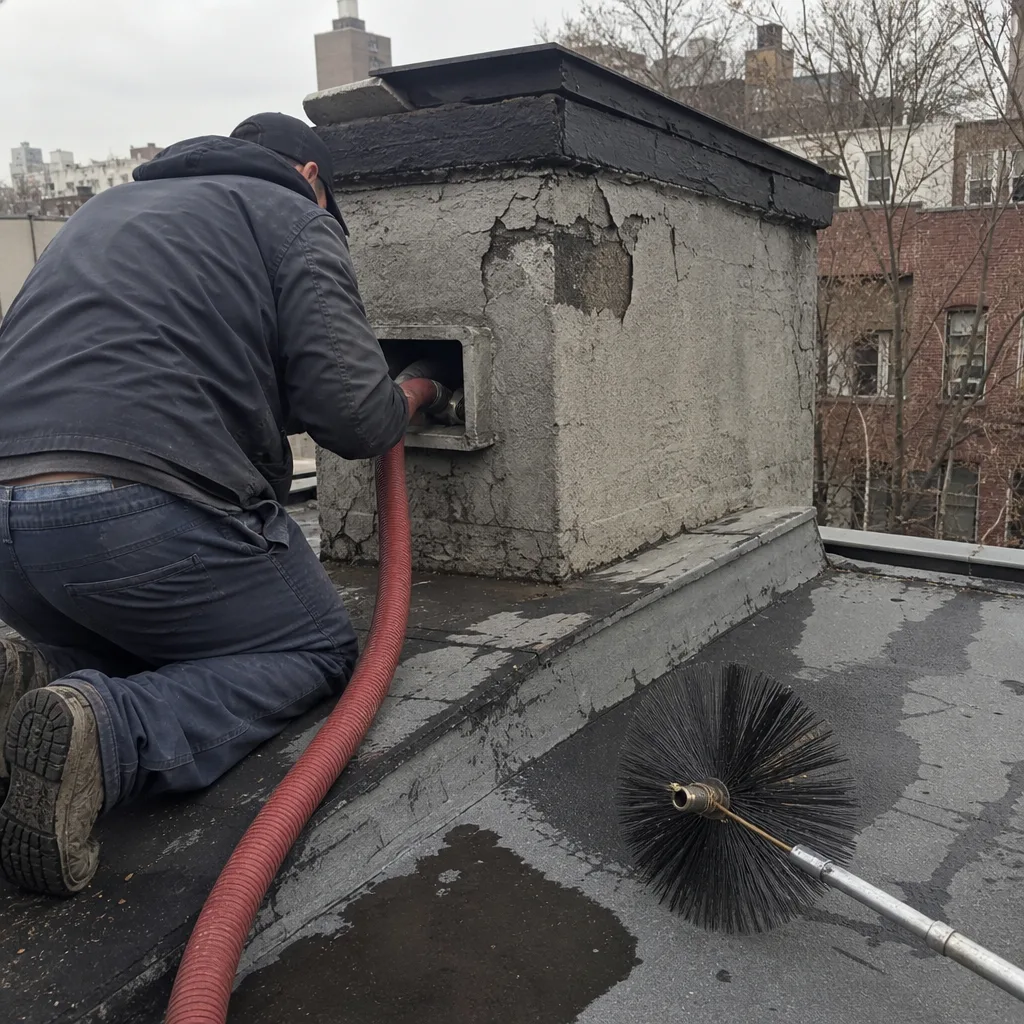 Before
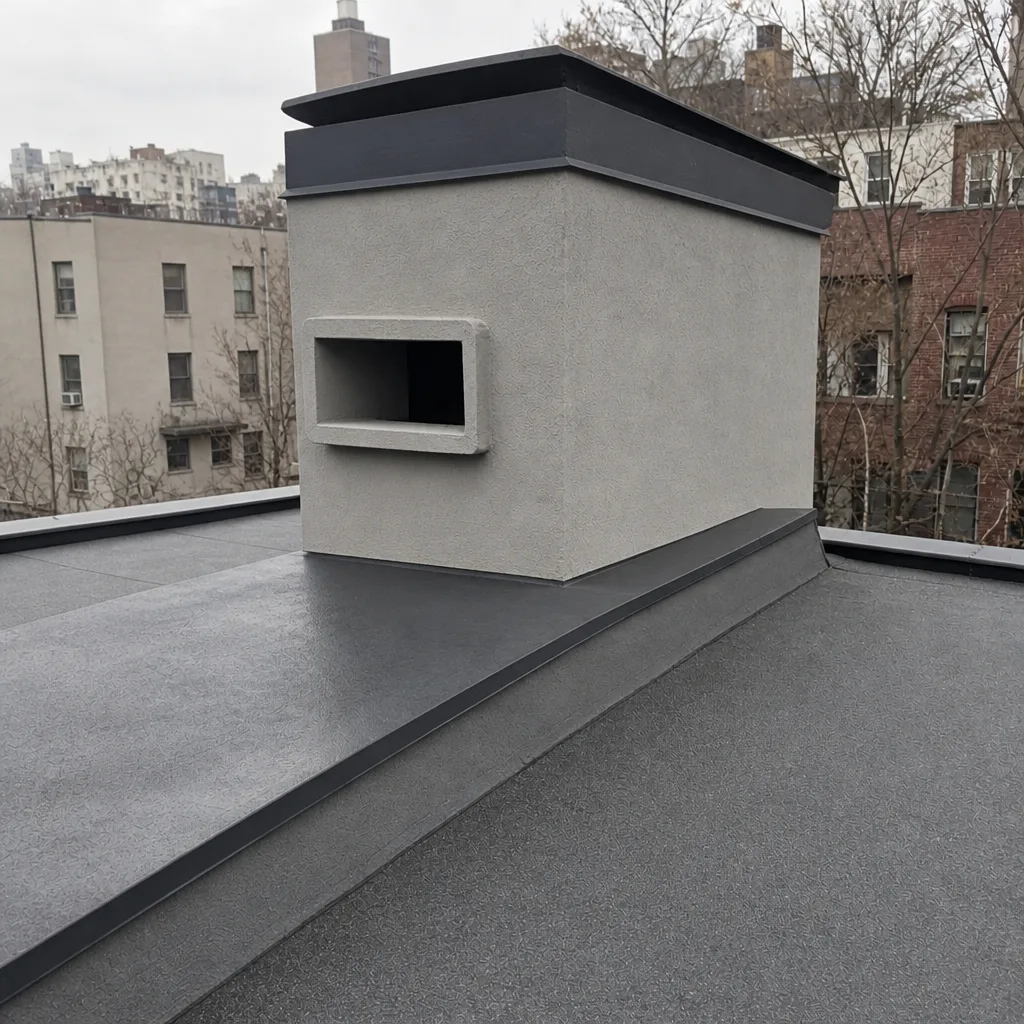 After
Why Long Island City Towers Change How Air Quality Work Is Done
Here’s the fact that shapes every air quality job in Long Island City’s waterfront towers: a single condo’s problem is rarely confined to one unit. Vertical duct risers and rooftop air handlers serve stacked units, which means sanitizing or mold treatment for one home often needs building management’s coordination and a shared scope that runs from the line’s riser to the unit’s registers. That’s a fundamentally different job from a single-family house, where the duct run belongs to one owner and one thermostat.
A typical job in a newer tower looks like this. Residents in newly occupied units notice a persistent drywall-and-silica dust smell and gritty residue at the registers months after move-in, because construction debris was sealed into the ductwork before the building was finished. A qualified pro runs a camera inspection down each riser drop, confirms negative pressure at the air handler, then uses agitation tools and HEPA filtration to pull the material back to the source. After that, supply and return ducts are sanitized before the registers go back on. Where condensation has fed mold through a humid summer, the fix usually pairs mold treatment with a UV light installation at the air handler so the blower motor and coil aren’t reseeding the line. This is why we never quote a vent count and call it a price. In a building like this, the scope is the line, not the register.
We serve the whole of Long Island City, from the East River waterfront towers to the converted lofts and low-rise blocks inland, and we assess each building’s system before we quote.
What Documentation to Demand When You Can’t See the Work
In a Long Island City condo, the ducts are out of sight, so the record is your only proof. Here’s what we hand over after a sanitizing or mold treatment job:
- Before-and-after camera images of your own riser drop and registers, not stock photos.
- A written scope stating exactly which line, from air handler to register, was treated.
- A record of the sanitizing products applied and the equipment used for containment.
- Any UV or filtration unit installed, with the model and placement noted.
- A written summary you can share with building management or a landlord.
If a contractor can’t produce that record, ask why. It’s the difference between a cleaning that solved the problem and one that just moved the dust around.
We Also Serve Cities Near Long Island City
Long Island City shares its building stock and its air with the neighborhoods across the water, and we work those too. If you’re just over the Pulaski Bridge in Greenpoint, or across the East River on the Upper East Side, in Kips Bay, or in Murray Hill, the same tower-riser scoping and documentation apply. We’ll tell you upfront if the job needs building coordination before we book it.
Serving Long Island City, NY – Our Local Coverage Area
We serve Long Island City and nearby communities. Use the map below to see the area we cover. If you’re nearby, we can almost certainly help.
FAQs – Air Quality & Sanitizing in Long Island City
It smells like construction dust because construction dust was sealed into your ductwork before the building was finished. In the newer towers, no first cleaning happened before occupancy, so drywall and silica debris sits in the riser drop and sheds at your registers. Air quality work here means a camera inspection down the riser, negative-pressure containment at the air handler, agitation and HEPA filtration to pull the material back to the source, then sanitizing. Call (855) 952-0316 for a free estimate; we scope the line before we quote.
Sometimes yes, sometimes no, and the honest answer depends on the line. If your unit has its own riser drop off the rooftop unit, we can scope to your registers and your run. If the riser is shared across stacked units, treating only your unit can push contamination back down the shaft, so we coordinate the scope with building management. A camera inspection tells us which situation you’re in. Call (855) 952-0316 for an exact quote; estimates are free.
You should expect before-and-after camera images of your own riser drop and registers, a written scope naming the line treated, a record of the products applied, and a note on any UV or filtration unit installed. We provide all of it, and it’s shareable with building management. The work happens out of sight, so the record is your proof. Call (855) 952-0316 to schedule a free estimate.
Mold comes back because the moisture source wasn’t addressed, only the visible growth. In Long Island City’s humid summers, condensation forms in duct runs serving the rooftop air handler, and cleaning the registers won’t stop it. The fix usually pairs a mold treatment with a UV light installation at the air handler so the blower motor and coil aren’t reseeding the line. Call (855) 952-0316 for a free estimate on the full fix.
With shared vertical risers, yes, a building-wide line scope is often the only approach that holds. Sanitizing one unit without coordinating the building-wide line just pushes contamination back down the shaft, so the scope has to run from the rooftop unit to the unit’s registers. We work directly with building management to book the access and service elevator window. Call (855) 952-0316 for a free estimate and we’ll outline the coordination.
Book Air Quality & Sanitizing in Long Island City
If your Long Island City unit smells musty, sheds dust at the registers, or has mold recurring near the air handler, it’s worth having the line properly inspected and scoped before you book anything. We work with Rotobrush and Nikro systems, bring Abatement Technologies containment equipment when the job calls for it, and install Honeywell and Aprilaire products directly. One flat price per system, agreed before work starts. Before-and-after photos of your own ducts, every time. Call (855) 952-0316 for a free estimate. We answer 24/7, with fast dispatch from 7am to 7pm, Sunday through Friday.
Written by the team at Air Duct Cleaning East Village.